 |
|
April 16, 2025


ASPANet.org | PA TIMES.org | Donate: 85-for-85
|
|
ASPA 2025 Annual Conference Focuses on Technology, Agency and Professional Integrity
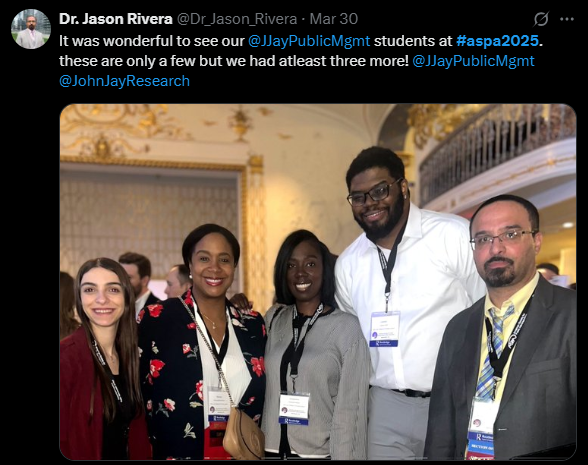
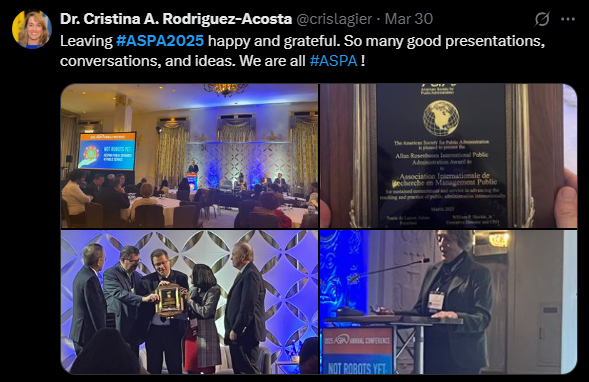
 ASPA's 2025 Annual Conference, which took place at the end of March, was built around the theme, "Not Robots Yet: Keeping Public Servants in Public Service," and proved to be a particularly timely gathering. Whether presentations focused on the role technology plays in public service and public administration, the roles humans continue to play or a combination of these perspectives, the 1,400 folks who gathered in Washington, DC all enjoyed the opportunity to join with friends and colleagues at this very critical time.
Keynote lectures from Mae Jemison, Janine O'Flynn, Marilyn Rubin and Harry Dunn all inspired attendees toward protecting agency, meeting the times head-on, working toward humane government and being ready to repair public service when the time comes. Of course, everyone also made space for time with friends and colleagues, as well—catching up over meals, visiting at networking receptions and having fun at the receptions and parties.
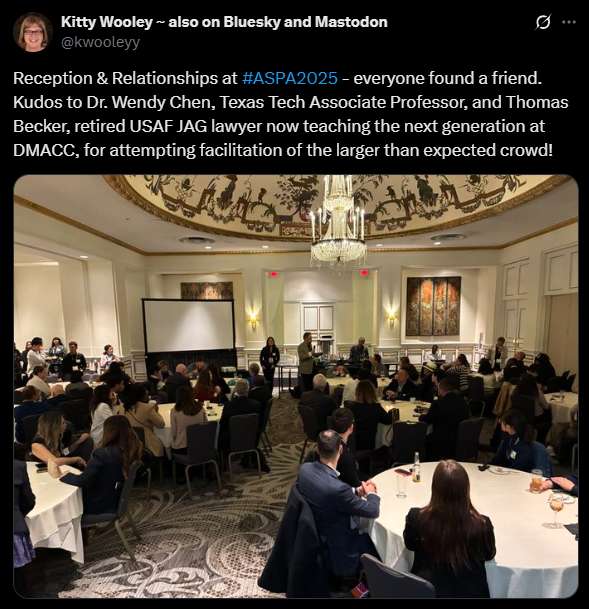
Opening keynote speaker and 2025 Elliot Richardson lecturer Mae Jemison packed the ballroom for her address. The former astronaut and current scientist and nonprofit leader shared stories about claiming your agency—"Of course you can be a scientist!"—and ensuring the decisions we make reflect who we serve and for whom we are responsible, not only the person in charge: "If I spent time being too interested in what people think of me, I wouldn't be doing my job. The decisions we make in our jobs should be based on who we are responsible for and what our tasks are.
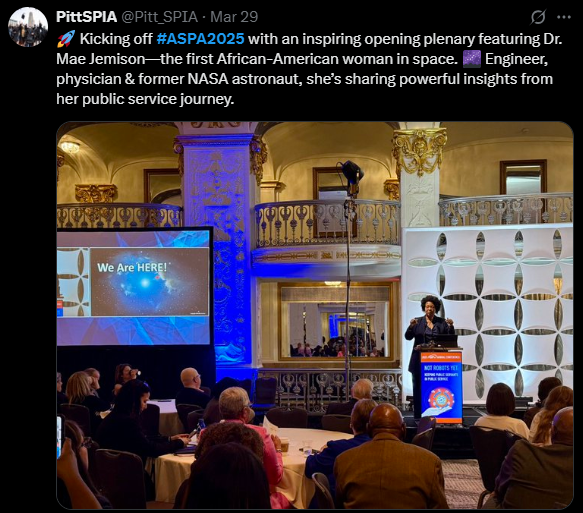
The book signing held after her remarks attracted a line through the hotel lobby as attendees waited to purchase her book, Find Where the Wind Goes, and have it signed. (We have a few more copies and will send details for how to purchase it soon.)
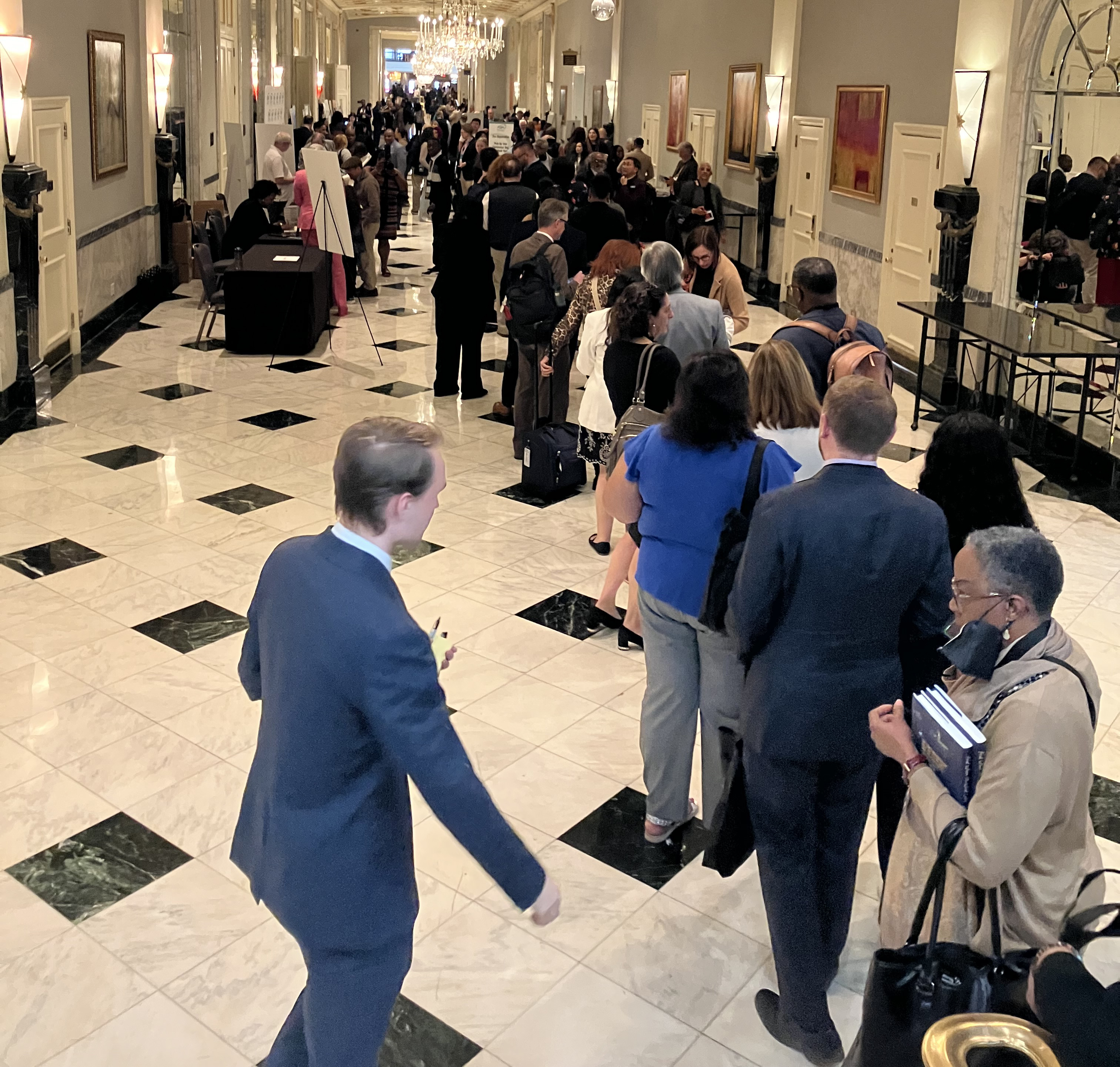
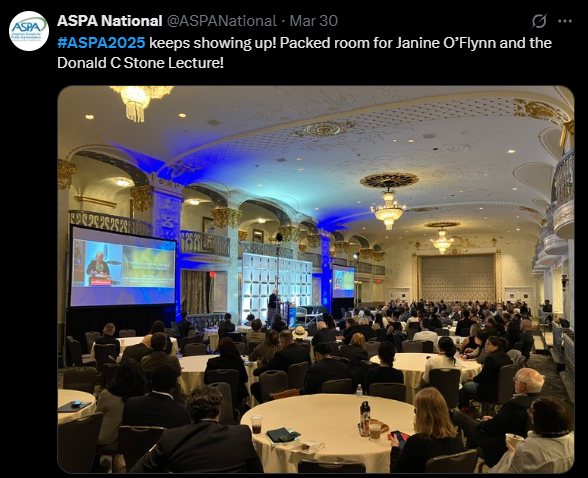
2025 Donald C. Stone Lecturer Janine O'Flynn encouraged those in the audience—also a packed room—to think differently about public administration and start using a more positive framework when conceptualizing the work: focus on positivity, complexity, empathy and humility. "These are not new ideas," Janine said. "But how we may weave these ideas together could be... when put together, these four ideas are mutually reinforcing." She also left attendees with a helpful closing thought: "Courage is contagious. Hopefully by coming together this week we can spread that courage around."
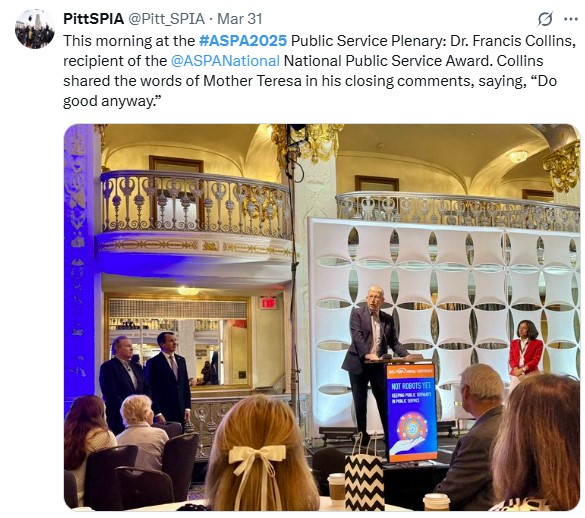
The final plenary of the event featured brief remarks from retired National Institutes of Health (NIH) Director Francis Collins as he accepted one of the year's National Public Service Awards, and a Q&A session with former Capitol Hill police officer Harry Dunn. Both shared their thoughts on the state of our country's democracy.
"It has been the privilege of a lifetime to spend time on the human genome project, to serve the country during COVID. But I know you're having group therapy at this meeting and I want to be a part of it. I need it too," observed Collins. "Public servants are being caricatured as lazy, inefficient bureaucrats? I know that's not true. The men and women I worked with at NIH personify excellence in every way. To see them persecuted now is truly heartbreaking... If we're going to have healing from this fractured circumstance, it's going to come from 'we the people,' including you. We have to learn how to listen to each other, respect each other and find common ground." Collins ended his remarks with a poem from Mother Theresa, "Do It Anyway," an inspiring message for those in public service.
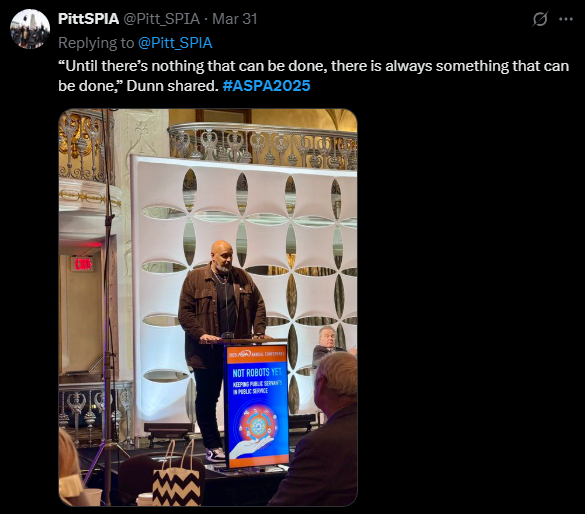
The struggle was named out loud when Dunn took the stage: "Don't ask someone how they're doing right now—unless you're ready for the honest answer." He went on to talk in very plain terms about his reactions to the January 6, 2021 riots, the 2024 election and where our nation stands right now. "My call to action: Find your something. Don't try to put out every fire—there are too many. Find one and try to put that out. If everyone does that, I think we'll be ok. I don't know if we'll be OK. But if we all lock in and do what we're passionate about, we have a chance." He then sat down for an insightful Q&A with ASPA Executive Director and CEO Bill Shields. Attendees were again treated to a book signing after the session, another line that stretched through the lobby.
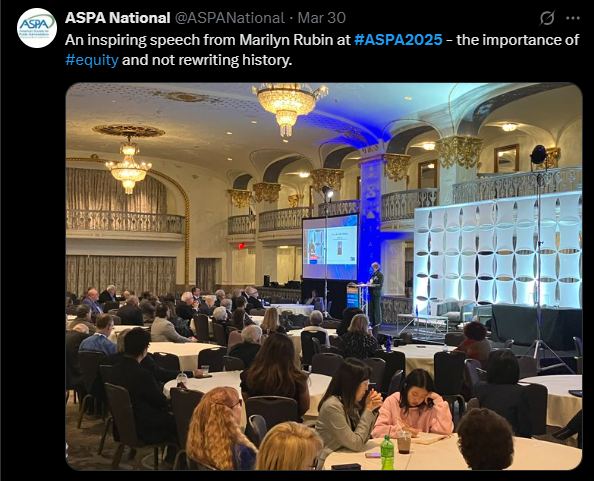
This was just the beginning, as numerous sessions and speeches took place throughout the conference, including an inspiring Nesta M. Gallas lecture given by Marilyn Rubin and an energizing speech from Robert Bullard as he presented the Gloria Hobson Nordin Social Equity lecture. Both shared perspectives on the history of equity in the United States and the fight that continues.
Ten presidential panels gave focused attention to invaluable conversations that reflect on present times, including a Q&A with former U.S. Department of Interior Inspector General Mark Greenblatt as he discussed the role of agency oversight and how critical it is to democracy; several conversations examining how public administration uses technology, AI, generative AI and other tools to advance efficiency and effectiveness; a "group therapy" session breaking down current federal workforce challenges and actions interested citizens can take to continue work toward good government; and more.
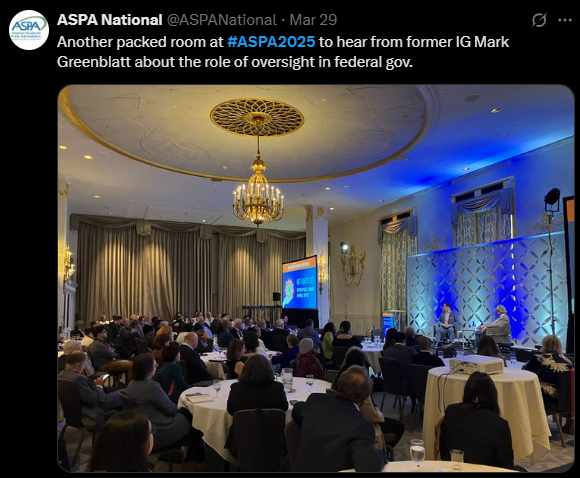
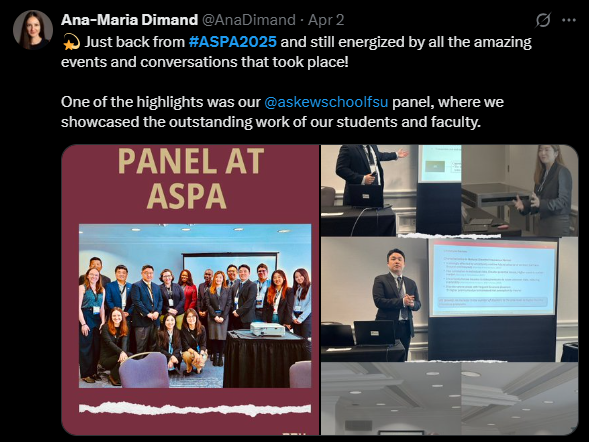
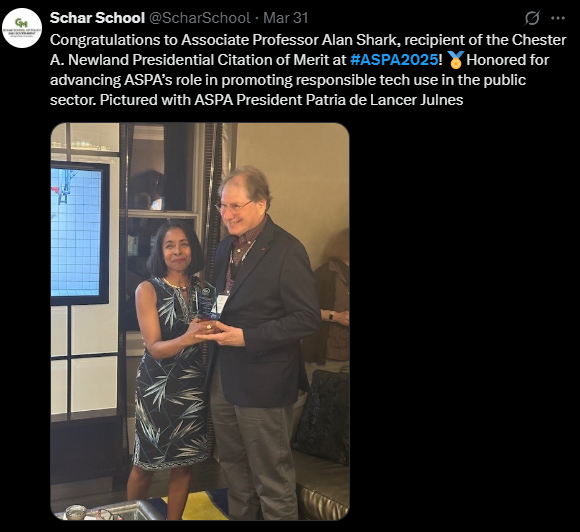
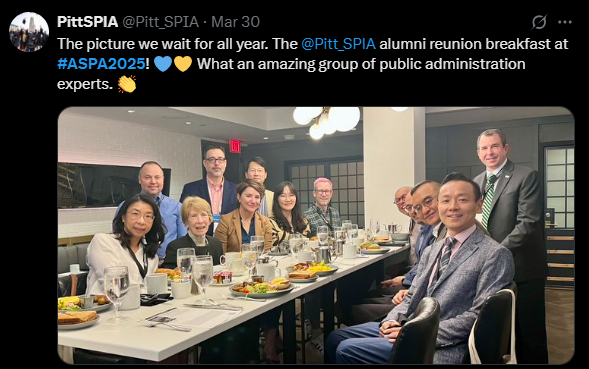
This five-day event encouraged attendees to not only examine current technologies carefully, but also look toward the future for how to keep "the human in the loop" and continue to show up in public service during challenging times. And, of course, everyone was excited to show up with ASPA in the coming months before we all gather for the 2026 conference in Hollywood, California!


E-Learning at Your Fingertips
 ASPA staff work tirelessly to keep your skills up to date and the information flowing all year long through our e-learning program. Visit our website to see more details about upcoming KeepingCurrent, BookTalk and Student and New Professional series programming.
ASPA's webinars will be back shortly! Contact us if you have a topic you'd like us to consider for our spring and summer programming. We are looking for topics and speakers that focus on the impact current changes at all levels of government are having on the profession; if you have ideas, send them our way! In the meantime, more than 250 hours of programming are in our webinar archives. Catch up on what you missed!
From the Archives
KeepingCurrent: Emotional Intelligence in PA: Mastering Strategic Communication Skills
Emotional intelligence fosters transparency, integrity and authenticity, whether forging bonds of trust between administrators and the public, or between your team's professional development needs. By understanding these emotions, administrators can approach conflict resolution more effectively. Listen to this webinar to learn more about these valuable skills. (Members only)

Students and New Professionals: Effective Networking for the Classroom, Breakroom and Beyond
Truly effective networking is integrated into your daily life. Yes, happy hours, coffees and lunches are helpful and you should always have business cards in your pocket—but that’s only part of this process. Networking, done best, is a daily habit and yields important, regular returns. Our speakers provided tips, insights and networking habits you can adjust to fit your needs. (Members only)

In Memoriam: Bob Denhardt
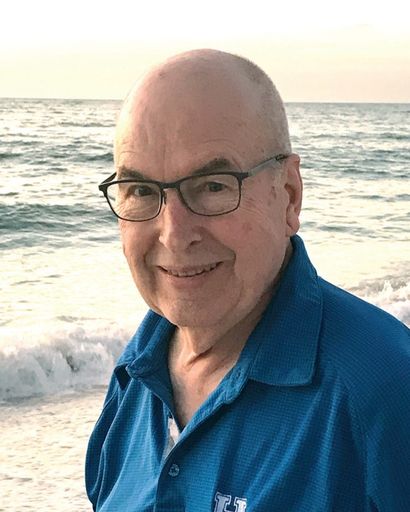 Public administration legend Robert Denhardt died on March 19, 2025, in Chandler, Arizona.
Denhardt was a long-time member of ASPA, having joined in 1969. He was a past president (1987-1988), a regular contributor to ASPA's endowment and a very active member of his local Chapter, wherever that was at the time. He also was a member of the Section on Public Administration Education and Section on Public Administration Research. He served ASPA through a wide range of committee involvement spanning decades of service before and after his presidency, including conference committees, awards committees, the endowment board, the National Council, the executive committee and more. He was the founder and first chair of ASPA's National Campaign for Public Service in the 1990s. He was a regular annual conference attendee throughout his career. He received ASPA's Dwight Waldo Award in 2004, celebrating lifetime achievement in scholarship in public administration.
Denhardt was born and raised in Bowling Green, Kentucky. Though decades away from his southern home had all but eliminated his accent, his genteel nature endured, as did his love of thoroughbreds, grits, barbecue and libations on the veranda.
Denhardt received his PhD from the University of Kentucky. A highly respected scholar, he published more than 100 journal articles and 22 books, some of which were published in multiple languages. His books include The Dance of Leadership, The New Public Service, Managing Human Behavior in Public and Nonprofit Organizations, The Pursuit of Significance, In the Shadow of Organization, Theories of Public Organization, Public Administration: An Action Orientation, Executive Leadership in the Public Service, The Revitalization of the Public Service and Pollution and Public Policy. His book, New Public Service: Serving, Not Steering, co-authored with his wife, Dr. Janet V. Denhardt, was first published in 2000 and is considered one of the seminal works that contributed to the development and popularization of the new public service model. Their prominent article of the same title was published originally in Public Administration Review in 2000 and was chosen as one of the 75 most influential papers from the journal when it celebrated its 75th anniversary.
He was a beloved professor and university leader. He retired from the University of Southern California, where he served as professor and director of the leadership program in the Sol Price School of Public Policy. Previously, he was regents and emeritus professor at Arizona State University, where he served as the Lattie and Elva Coor presidential chair, Lincoln professor of leadership and ethics, and director of the School of Public Affairs. While at ASU, he played a critical role in the creation of the Marvin Andrews Fellowship for local government management aimed at training the next generation of aspiring city managers. Prior to joining the faculty at ASU, he was the Charles P. Messick professor of public administration at the University of Delaware. He previously taught at the Universities of Colorado, Missouri, Kansas, New Orleans and Central Florida. He held several major administrative positions in these universities, serving as vice provost at the University of Missouri-Columbia. He was a Fulbright Scholar in Australia in 1990.
Denhardt was an elected fellow of the National Academy of Public Administration, fellow of the Canadian Centre for Management Development and served as a consultant to various public and private organizations and governments on leadership, civic engagement and management.
Denhardt loved music. He could pick a mean banjo and he also played the guitar, piano, saxophone and pretty much any other instrument you can think of. But he and the banjo were a match made in heaven, assuming you are a fan of bluegrass music.
Bob adored his children, Michael (Kim) and Cari (Jason), and his stepchildren, Ben Vinzant (Kim) and Mary Goodman (Michael). He was a devoted husband, partner and friend to his wife of 26 years. His sweet nature and knack for making up children’s stories about flamingos meant Grandpa Bob was a big hit with his grandchildren: Madi, Jackson, Lily, Adeline, Elle, and Zoe. He dearly loved and will be missed by his brother, Jim (Grace), his sister, Eleanor Stuart (Randy), and their kids and grandkids.
Denhardt was a loyal and generous friend and colleague to many across the United States and around the world. We are all better for having known him. A party/celebration of life for Bob will be held this summer in Nashville with his family and friends.
You can read his official obituary online here.
In Memoriam: Beryl Radin
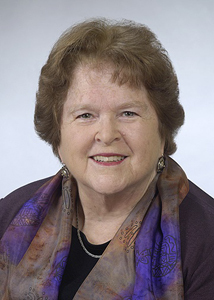 Beryl Radin, author, researcher, professor, self-proclaimed “pracademic,” was a leader in her field of public policy and public management, a dedicated mentor and a dear friend to many. She passed away peacefully in December 2024, at the age of 88.
Radin was a long-time ASPA member, dating back to 1973. She was active in a number of Chapters and Sections including the Section on Intergovernmental Administration and Management; Section for Women in Public Administration; Section on Public Administration Research; and the National Capital Area Chapter. She served on numerous ASPA committees throughout her life, received several awards, including the William E. and Frederick Mosher Award from Public Administration Review, and was a Center for Accountability and Performance fellow. She was a near-constant attendee at the Annual Conference, speaking at sessions in various capacities.
Teaching and mentoring were central to Radin's life’s work. She was committed to bridging the gap between academia and practice. She was passionate about both teaching and learning from practitioners, as well as guiding academics into the public sector to gain invaluable real-world experience. She started her government service in 1963 with a role at the U.S. Commission on Civil Rights; she later served as special advisor to the assistant secretary for management and budget of the U.S. Department of Health and Human Services. Her work has included experience in Australia, India, Israel, Azerbaijan, Hong Kong and Canada.
Radin taught at Georgetown University, American University, University of Baltimore, SUNY Albany, the University of Southern California and University of Texas at Austin. A prolific author, she wrote more than a dozen books and countless articles on critical topics in public policy and public management, including Beyond Machiavelli; Political Analysis Comes of Age; The Accountable Juggler: The Art of Leadership in a Federal Agency; Challenging the Performance Movement: Accountability, Complexity and Democratic Values; and Federal Management Reform in a World of Contradictions. She was editor of the Journal of Public Administration Research and Theory (2000-2005) and editor of the Georgetown University Press book series Public Management and Change.
Radin's influence extended far beyond the classroom, as she continued to guide and inspire her students throughout their lives. She maintained lasting connections with many, offering support and wisdom long after they had left her courses.
One of a kind, Radin charted her own course, unbound by convention or societal expectations. She cared deeply about social issues, advocating for equity, justice and meaningful change both within and beyond her field. Along the way, she forged friendships around the world and was known for her spirited discussions on the issues that mattered the most to her.
Even in her later years, Beryl remained actively engaged in her field. She continued writing, reflecting and contributing her insights until shortly before her passing. She was a fellow at the National Academy of Public Administration, past president of the Association for Public Policy Analysis and Management and former head of the public administration section of the American Political Science Association. She received the 2002 Donald Stone Award from ASPA's Section on Intergovernmental Administration and Management (SIAM); the 2009 H. George Frederickson Award for career achievement in scholarship from the Public Management Research Association; the 2012 John Gaus award from the American Political Science Association for career achievement; and the 2014 International Research Society for Public Management Routledge Prize for Outstanding Contribution to Public Management Research.
Radin received her BA from Antioch College, her MA from the University of Minnesota and her PhD in social policies planning from University of California, Berkeley.
Born in 1936 to Norman Radin and Sophie Edelman Radin, she is survived by her brother, Arthur Radin (Truus), her nieces Anneke Radin-Snaith (Thaddeus) and Sasha Radin (Robert), great-nieces Sophie Snaith and Iris Snaith, and extended family. Her warmth, intellect and unwavering dedication to her work and those around her will be deeply missed.
You can read her official obituary online here.
In Memoriam: Blue Eagle Wooldridge
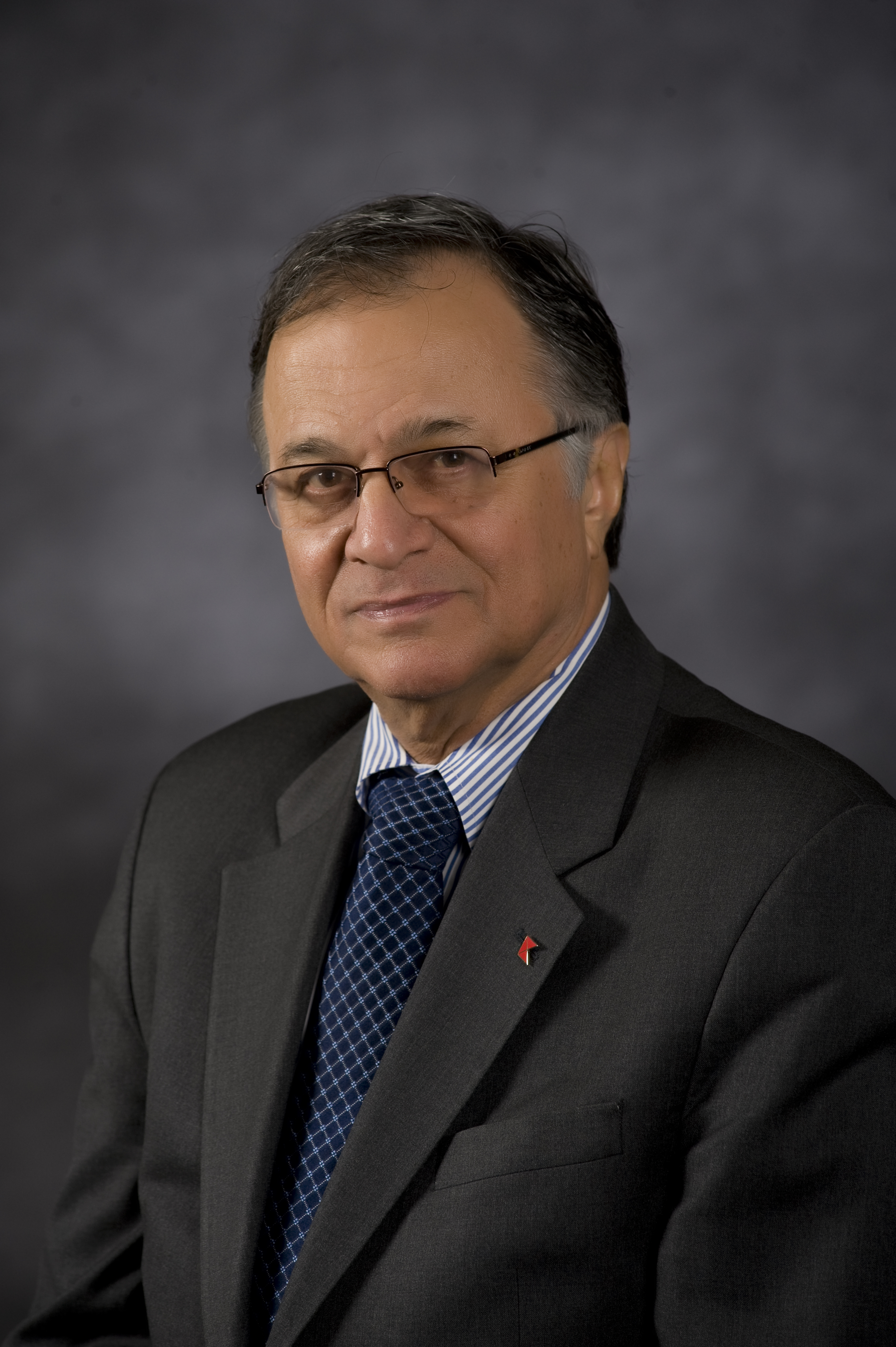 Blue Eagle Wooldridge, 86, died on March 22, 2025. He was born in 1938, originally from England but his family settled in Steeles Tavern, Virginia.
Wooldridge was a long-time ASPA member and a stalwart attendee at the annual conference and many other ASPA events. He joined ASPA in 1968 and was at the vanguard of social equity policy analysis throughout his life. During the late 1970s, he co-chaired ASPA’s first policy committee on federal affirmative action and equal employment opportunity. The committee provided some of the earliest and most comprehensive data on two of the most significant public policies of our times. He became an active member of COMPA in 1973 and served as its president from 1985-1986, representing COMPA on the ASPA National Council. He received ASPA's 2022 Gloria Hobson Nordin Social Equity Award in 2022.
Wooldridge attended Lylburn Dowing School in Lexington, VA. Upon graduation, he went on to receive a BA from Berea College, an MA from the Wharton Graduate Division of the University of Pennsylvania and an MPA and DPA from the University of Southern California.
Wooldridge and his wife settled in Fredericksburg, Virginia. During his career, he served as extension professor at the Institute of Public Service International at the University of Connecticut; director of the graduate program in urban affairs (Northern Virginia) at Virginia Tech; director of the Urban Management Curriculum Development project and training association with the National Training and Development Service; coordinator of federal programs and budget analyst for the U.S. Virgin Islands; and Peace Corps volunteer and senior science master in secondary schools in Nigeria. He spent most of the last 32 years as a tenured professor at Virginia Commonwealth University (VCU). He retired in 2019 as distinguished career professor and professor emeritus.
Wooldridge conducted numerous training programs for U.S. and global elected and appointed officials on topics including the effects of workforce diversity; social equity and justice; public budgeting; strategic planning; performance measurement and more. In 1989, he served as faculty-in-residence in Virginia’s Department of Planning and Budget, where he developed a training curriculum for budget analysts. He also led efforts in designing performance measurements for the Office of Budget and Strategic Planning and for the Cities of Richmond and Petersburg, Virginia.
Wooldridge authored or coauthored more than 150 papers, presentations, professional reports and training modules on such topics as public budgeting, revenue management, productivity improvement and public sector training and education. Portions of his works have been translated into Czech, Hungarian, Bulgarian, Danish, Italian, Russian, Macedonian, French, Lithuanian and Georgian.
Beyond his service to ASPA, Wooldridge worked to create programs and initiatives for the Network of Schools of Public Policy, Affairs, and Administration (NASPAA) that have had a positive impact on diversity in the profession. As co-chair of NASPAA's Diversity and Social Equity Committee, he was integrally involved in developing the PhD Pathways Initiative, a paid internship program that provides a pipeline for under-represented minorities who wish to pursue a doctoral degree in public policy and administration. He also was an advocate for the network’s Minority Serving Institutions’ Initiative, offering voluntary technical support to minority-serving institutions undergoing the accreditation review process.
Wooldridge received the Teaching Excellence Award given by the College of Architecture and Urban Studies at Virginia Tech and twice received the School of Community and Public Affairs’ Excellence in University and Community Service Award at VCU. He also received the College of Humanities and Sciences Distinguished Service Award in 1999. In June 2021, he was the inaugural recipient of the National Academy of Public Administration's Philip J. Rutledge award at its Social Equity Leadership Conference, as an internationally recognized scholar whose work examines the role of administrators, systems and policies in promoting the equitable distribution of government goods and services.
Wooldridge is survived by his wife, Annie Brittian Wooldridge; a son, Bertram Robinson (Lisa); a daughter, Janine Higgins (Joseph); grandchildren Bertram Robinson, Jr., Julian Higgins, Bailey Higgins and Donavan Robinson; niece Tanya Wooldridge-Days (Elliott); nephews Edward Whitehead, Aaron Whitehead (Jessica); sister-in-law Thomasina Wooldridge and a host of other relatives and friends. The family will hold a private memorial for Blue in the coming months and will spread his ashes in Virginia and on the Eastern Shore of Maryland. Those who wish to remember Blue in a special way can make gifts in his name to their favorite charity.
You can read his official obituary online here.
Public Service Recognition Week Begins May 4!
 National Public Service Recognition Week (PSRW), an annual opportunity across the United States to pay tribute to public service employees, begins on May 4. We know several Chapters will be celebrating with awards ceremonies and other gatherings, and hope the Chapter (and Section) leaders reading this now will plan for some kind of celebration—if not that week, certainly sometime in May. We need to celebrate our public servants at all levels of government now more than ever!
You do not have to attend a PSRW event to honor your public servants. If you live in an area not served by a Chapter (or not celebrating this year), celebrate on your own. From letter-writing campaigns to social media posts to op-eds in your local newspapers, there are plenty of ways to show public administrators at the local, state and federal level that their work is valued. If you need help getting started, the Partnership for Public Service has put together a wide range of tools and resources you can use to amp up this year's celebration. (Thanks, Partnership!)
However you choose to get involved this May, make sure you show your hard-working public servants that you value them. Make plans now and spread the word with your network!
For the public servants reading this message, happy PSRW! The American Society for Public Administration—all 12,000 members and partners—appreciates you! Thank you for your service!
We will be publishing a list of all ASPA groups celebrating PSRW2025. Contact us to share your details.
ASPA Celebrates Milestone Anniversaries
 Each year at the annual conference ASPA recognizes those celebrating 25- and 50-year ASPA anniversaries: individuals who have been ASPA members continuously for those time spans. We did so again this year during the plenaries and are delighted to include those lists here, as well.
Below are the 19 individuals celebrating 25 years of being an ASPA member:
- Roslyn Alic-Batson
- Derek K. Allen
- James W. Beeks, Sr.
- Irfan Bora
- David Campbell
- Joseph Chavez
- Alison W. Gannon
- R. Sam Garrett
- Augustine Hammond
- Gayla A. Kraetsch Hartsough
- Christopher P. Marcello
- Brendan S. McCluskey
- Jack Meek
- Kimberly Nelson
- Linda Pederson
- Scott Robinson
- John Martin Strate
- Dennis L. Whitaker
- Connie Zimmerman
Below are the 12 members celebrating 50 years of being an ASPA member:
- James W. Antonen
- Terry L. Cooper
- Brian Rodney Gilmore
- Roger Kemp
- Robert Montjoy
- Richard Moore
- Marc Pfeiffer
- Elaine Orr
- David Sears
- Jeffrey Seymour
- Christine Gibbs Springer
- David Twigg
ASPA congratulates all of this year's anniversary celebrants on their long-term commitment to our organization and wishes each of them many more years of dedication in the future.
Please reach out to those you recognize on this list with your own congratulations.
ASPA's 85th Anniversary: Final Months to Make a Donation
 ASPA's 85th anniversary concluded during the Annual Conference—passing into our 86th year on April 1—but we will continue to take donations through this summer, as so many members have wanted to support our ongoing efforts. Add your name to the list of those who have celebrated with us before Labor Day.
Our field has faced enormous change and challenge since our founding in 1939. Yet we have remained steadfast in our mission of advancing excellence in public service. Indeed, we have an important story to tell. We are an association on strong financial footing, conducting a robust program of in-person and virtual events that matter. We are home to the top-rated journal in our field. We are redefining membership in a way that attracts a growing number of practitioners. And, we make tangible investments in the development of our student and new professional members.
We do all of this with a small but dedicated staff committed to excellence. As you interact with our staff and volunteer leaders, we ask you to think about the resources it takes to provide those connections and invite you to participate in our 85-for-85 campaign.
Please consider making a special donation in some denomination of $85 to honor our history and accomplishments... and position ASPA well for the next 85 years.
Make your donation on our website any time (log in information is required; contact us for your details) and know that not only are you supporting ASPA now, but also that you will be on the front lines ensuring that ASPA will be sending messages like this one to future generations of professionals dedicated to the public good.
Use our website now or contact us for help setting up your donation. Monthly payment plans are available!
Thank you for celebrating our 85th anniversary and supporting the future of public service.

Trans-Atlantic Dialogue Takes Place This August!
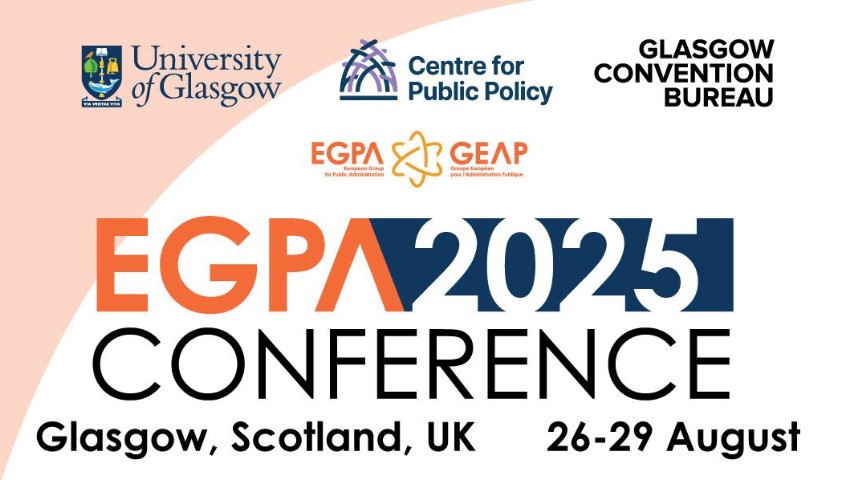 The EGPA 2025 Conference will be held in Glasgow, Scotland, August 26-29, in association with the University of Glasgow’s Centre for Public Policy and the Glasgow Convention Bureau.
The EGPA Conference is the annual meeting of the multi-disciplinary community of Public Administration academics, researchers, and practitioners in Europe, also joined by colleagues from the IIAS network. The Conference is organized around several activities: plenary sessions, dedicated seminars (PhD symposium, French-speaking seminar, and thematic ones), panels arranged by 23 EGPA Permanent Study Groups, and side meetings (EAPAA meetings for accreditation, EGPA Steering Committee Meeting, Meeting of the Permanent Study Groups co-chairs and collaborative projects’ meetings).
It is well-established that the integrity of democratic forms of government internationally are being challenged by a variety of sources. These include the spread of disinformation and the associated erosion of trust in public institutions; the transnational nature of global threats such as the climate and biodiversity crises; the need to better engage and represent citizens in increasingly diverse societies; the spread of nativist politics and of course the challenges wrought by digital technologies on democratic processes. Within public administration research questions are being raised about the fragility of states or even the prospect of failing states due to this heightened turbulence.
In order to explore these issues, for this year’s Trans-Atlantic Dialogue we seek to address these changes as they manifest in four domains:
- How to rethink the role of bureaucracies in the 21st century and their relationship to politics, society and the economy, particularly given changing political-administrative relationships or ‘bargains’
- How to design new national and international public institutions to tackle the political and societal challenges of today, including new technological developments such as AI
- How to support and reaffirm democratic values within public administrations
- How best can administrative systems represent future generations and promote wellbeing in their current decision-making
We welcome papers that speak to one or more of these themes. Contributions can be theoretical, conceptual, empirical, or methodological, but must demonstrate a clear contribution to public administration theory and / or practice. We particularly welcome contributions that take a comparative approach. Typically, abstracts will include the purpose of the paper; research approach and methods; main findings and / or implications; and references.
All abstracts are due May 9, 2025. Click here to view the full Call for Proposals.
NAPA Hosts Public Health Workforce Capacity Webinar
Please join the National Academy for Public Administration for the Public Health Working Group’s next webinar focused on workforce capacity the second in a series of three focusing on public health in times of crisis and disaster.
Webinar: Workforce Capacity Challenges and the Intersection of Adaptive Multi-sector Systems, People Skills, and Technology
Date: April 28
Time: 1 p.m. ET
Register
In this session, we discuss issues that limit our systems’ responsiveness to natural hazards, extreme events and health crises. How do we develop integrated systems, considering workforce capacity challenges and the intersection of adaptive multi-sector systems, people skills and technology?
The first webinar of the series discussed intergovernmental collaboration to manage disasters, emergencies, and crises. A few of the key takeaways from that session:
- Improving messaging around uncertainty in health emergencies, being clear about what is known and unknown.
- State and local governments promote community preparedness as part of everyday life, not just individual preparedness while involving community leaders and organizations.
- Government leaders to consider ways to empower and listen to employees and community members to build trust and improve decision-making.
Click here to register for this event.

Public Administration Today Highlight
 Public Administration Today features white papers, research and blogs from across the profession. If you're interested in more—especially your own curated news feed in your inbox every week—visit the website, create an account and check off your interest areas so you can stay up to date about the latest research being released!
Solving the Public Sector Workforce Crisis: What Local Governments Need to Know
 via Zencity: Across the country, local governments are navigating a growing workforce crisis. As retirements accelerate and competition from the private sector intensifies, cities and counties are struggling to fill critical roles—from planning and public works to IT and communications.
Tips, Resources and Updates
Is Public Service Loan Forgiveness Going Away? Understanding Trump’s Executive Order
On Mar. 7, President Donald Trump signed an executive order that seeks to limit who can qualify for Public Service Loan Forgiveness (PSLF). It directs the Education Secretary to write a proposal removing PSLF eligibility for borrowers who work for organizations serving “a substantial illegal purpose.” Despite the order’s strong language, at this point, no borrowers are at imminent risk of losing their eligibility for PSLF.
What Happens to Student Loans If the Education Dept. Closes?
The White House released an executive order instructing the secretary of education to begin shutting down the department—but not to cancel your debt.
Weathering the Storm: Financial Crisis Strategies for Federal Employees
Expert advice from a financial planner on building resilience and managing financial hardship.
America's Digital Infrastructure Belongs to You
We’ve seen unprecedented attacks on our nation’s federal digital infrastructure, from removing or restricting datasets and tools, to taking websites offline, to widespread layoffs.
The Dangers of Congress’ Latest Election Bill
The SAVE Act threatens to block millions of Americans from voting while also imposing significant burdens on state and local election officials.
Harvard Says It Will Not Comply with Trump Administration’s Demands
Federal officials said Harvard must enact “merit-based reform” in hiring and admissions and report international students who broke rules, among other steps. Harvard called the demands unlawful.

In the News
 Today's headlines contain plenty of news coverage of some of our nation's most pressing public administration challenges. ASPA has curated some of the most important stories from recent weeks. If you have not seen these yet, make sure you read them now!
Infrastructure
Public Finance
Public Service
Note that most news related to federal workforce changes by the current administration are being reported in Federal Workforce in Turmoil. Bridge subscribers have been automatically subscribed to that publication; contact us if you need to check about your ASPA email subscriptions.
Social Equity
Members in the News
Don Kettl:
Whatever Happened to Federalism?
and
The DOGE Risk to Fighting Waste
Steve Kelman:
Musk Taking Wrong Approach to Creating Government Efficiencies
and
Back to the Future at GSA with Contracting Executive Order
Don Moynihan:
As Savings Disappear, Social Security Is also under Threat,
The Attack on International Students
and
This Tax Day, an IRS in Crisis
Donna Shalala:
Former HHS Secretary Donna Shalala Discusses Trump administration Cuts to Agency
Alan Shark:
Cyber Insecurity: Shields Down?
GSPIA:
GSPIA Changes Name to School of Public and International Affairs
|
|
|
|
Around Public Administration
Here are the most recent updates from across the profession. Did we miss you? Send us your news and we'll include it in the next round!
Upcoming Events:
-
Rosenberg Dialogue: The Supreme Court Reverses the Chevron Deference
Online via Zoom | April 23
Register here
-
33rd NISPAcee Annual Conference
Bratislava, Slovakia | May 22-24
Theme: Polycrisis and Multilevel Governance: Impacts, Lessons Learned, Challenges and Opportunities
Registration is open
-
2025 Midwest Public Affairs Conference (MPAC)
Kansas City, Missouri | June 4-6
Theme: Rebuilding Community Trust in Turbulent Times
-
2025 PA Theory Networking Conference
Virtual | June 12-15
Theme: Navigating Democracy’s Promise: Merits, Values, and the Complexities of Governance
The Call for Proposals is open
-
EGPA2025 Conference/Trans-Atlantic Dialogue
Glasgow, Scotland | August 26-29
Theme: EGPA at 50: Prospects for Public Administration across Europe
The Call for Proposals is open; conference details are available
-
2025 UKAPA Annual Conference
Belfast, Northern Ireland, UK | September 11-12
Theme: The Future of Public Administration
The Call for Proposals is open (email address)
-
ABFM 37th Annual Research Conference
Atlanta | October 23-25
Theme: Collaborative Budgeting: Fiscal Relationships and Financial Networks to Advance Government Work
The Call for Proposals is open
-
2025 NECoPA Conference
Union Township, New Jersey | November 7-8
More details coming soon!
Calls for proposals, calls for nominations and other updates:
-
Ian Axford Fellowships in Public Policy Application Period Open
Ian Axford Fellowships (New Zealand) announces its application window for 2026 Fellows is open. Fellowships are for outstanding mid-career U.S. professionals, interested in gaining research and first-hand knowledge of public policy in New Zealand. The mission of the Ian Axford Fellowships in Public Policy programme is to increase mutual understanding between the United States and New Zealand; Axford fellows are expected to understand and support this mission. The Fellowship is interested in candidates who can contribute to contemporary policy priorities in New Zealand. Fellowships can be between three to five months in duration; applicants should discuss a timeline preference with their potential host agency, but the Axford board will decide what length of fellowship they will offer selected fellows. Fellows are required to attend an orientation programme held each February in Wellington. Find more information on the Ian Axford Fellowship website. All applications are due by April 22 (New Zealand time).
-
University of Chicago, Harris School of Public Policy Application Period Open
The University of Chicago, Harris School's credentialing programs are open for applications. Programs include: Policy Analytics Credential—a nine-week online program that provides a foundational introduction to R programming and statistics (March 31–May 30); Data and Policy Summer Scholar—a seven-week online program that provides training in data analytics and R programming (June 30–August 15); Policy Research and Innovation Bootcamp—a two-week, in-person program in Chicago focusing on policy research methods, a Policy Hackathon, and career development (July 28–August 8); and Persuasive Writing Credential—a six-week online program that equips you with skills to craft evidence-based policy stories that drive meaningful action (July 14–August 22). Find more information via the links above.
-
Call for Proposals: ABFM Research Conference
The Association for Budgeting and Financial Management invites proposals for panels, papers and posters for its 37th annual research conference, October 23–25 at the Loudermilk Conference Center on the Atlanta campus of Georgia State University. Proposals are invited from scholars, students and practitioners of public budgeting and financial management on the full range of topics encompassed by the Section's name. Proposals should address relevant issues at any level of government or other public-serving organization, across the full range of practical and theoretical applications. Examples of topics from panels and presentations in previous years are provided below. This year’s conference has a special interest in collaborative budgeting for effective and ethical government outcomes. All submissions are due by May 1, 2025. Click here for more information.
-
Call for Proposals: UKAPA 2025 Annual Conference
Building on last year’s inaugural conference, which considered the future of public services, this year’s theme is "The Future of Public Administration." With governments around the world wrestling with stagnant economic growth and rising public expectations, while approaching the limits of public toleration for higher taxation, the resulting fiscal stress poses serious challenges in terms of the size, scope and funding of the state, and of publicly provided goods, services and welfare. Environmental pressures, sustainability concerns, demographic change and rapidly evolving technological capabilities, combine to exacerbate these intense pressures on governments, policy makers and public administrators. Therefore, those actors are being tasked with developing innovative ways of providing public services within ever tighter public budgets. Public provision in many states is at a crossroads, with previous longstanding commitments to universalism susceptible to calls for more affordable but selective governmental interventions. The changing global landscape demands a renewed conversation between academics, policy makers and practitioners to examine how best to meet the challenges of our age. Governments everywhere are obliged to examine the breadth of their operations, considering radical measures in terms of the form, function, finance and staffing of the public sector, if the most vulnerable in society are to be protected, in ways that do not undermine incentives and economic vitality, nor alienate public sector workforces. In addition, and closer to home, the ongoing retrenchment with job cuts and course consolidation in the UK higher education sector may well pose questions over "The Future of Public Administration" in universities. Hence, we will be seeking to have a frank dialogue about the impact of these developments. This two-day conference provides a space for academics, researchers, doctoral students and practitioners to discuss the future of public administration. The multi-disciplinary nature of the event will provide opportunities for colleagues from the various dimensions of public administration (and allied subjects) to connect and engage in open dialogue and vigorous debate. Find full conference information online; all abstracts are due by May 5. Abstracts may be submitted via email here.
-
Special Issue: Public Budgeting and Finance—Adversarial Collaborations in Public Budgeting and Finance
Adversarial collaboration, an approach proposed by Nobel Prize Laureate Daniel Kahneman, is a method for resolving scientific disputes that arise from conflicting theoretical or ideological views. Authors or teams with opposing views work together on a research project to enhance or clarify understanding of a disputed knowledge area in a mutually satisfying manner. The project is designed to eliminate clear biases or weaknesses that could skew the conclusions. The participation of adversaries throughout the study ensures shared accountability and careful communication of the research. Furthermore, there's typically a pre-commitment to publish the results, irrespective of the findings. Despite their potential, adversarial collaborations aren't as prevalent as other open science innovations aimed at enhancing credibility through transparency, like data sharing, open materials and study preregistration. Public Budgeting & Finance intends to address this shortfall with a special issue (set for late 2026 or early 2027) focused on publishing and recognizing adversarial collaborations. This initiative is open to all topics relevant to public finances. Proposed projects will be evaluated and accepted on a rolling basis through May 2025. Accepted proposals are expected to complete manuscripts by April 1, 2026. Selected teams will be invited to present results at a special conference or dedicated session on the theme of Adversarial Collaborations in Public Finance, and travel funding will be extended to invitees. For more information, contact co-editors-in-Chief Craig Johnson and Justin Ross.
Click here for more information.
-
PMM Special Issue Call for Papers
Public Money and Management announces a special issue: The Politics and Management of Policing. The policing of society is a core feature of the modern state, lying at the heart of relationships between citizens and the state, with questions of legitimacy, equity, power, authority, governance as well as the effectiveness and efficiency of organizational performance as central matters of interest. Policing has some distinctive features, yet also offers insights to other public services. While police organizations are of particular scholarly and professional interest, the analysis of policing may include other groups, organizations and institutions concerned with order and safety in society, hence the focus is on policing not only police. With many countries contemplating or implementing reforms to police organizations, this topic is of wide interest to both academics and practitioners. The audience for readers of this themed issue is an interdisciplinary and broadly defined community of academics and professionals who share an interest in the research of policing, law enforcement and the provision of public safety from an organizational, managerial, governance and/or public policy analysis perspective. Editors invite articles exploring questions of policing and public management, for example concerning the legitimacy, equity, power, authority, governance and organizational performance in policing; the analysis of organizational functions such as strategic planning, human resource management, budgeting and evaluation, coordination of operations, control of accountability of policing, cooperation with public and private partners; whether and how policing is value-creating or value-destroying in different settings and social environments; changing roles and expectations of police at points of political and societal change and/or stress and austerity; comparative analysis of policing values, operations, consequences in or across different locales; political governance systems and their implications for the provision of an effective, fair and accountable police service—in both its ideal forms and its practical manifestations—for policing. All submissions are due June 16, 2025. Click here for more information.
PA TIMES Online
 Here's a selection of current pieces on PA TIMES Online, covering a range of issues within the profession. We accept individual articles on a rolling basis; if you have a piece you think would fit our publication, submit it to [email protected] for consideration. (Please review our submission guidelines in advance!)
|
| |
|