 |
|
March 12, 2025


ASPANet.org | PA TIMES.org | Donate: 85-for-85
|
|
ASPA's 2025 Annual Conference Features All-Star Line-Up
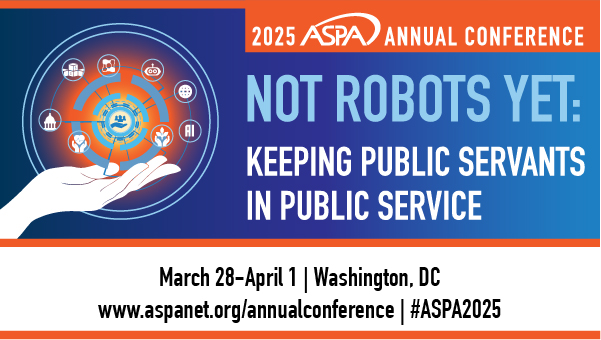 ASPA's 2025 Annual Conference is just two weeks away and features a robust line-up of speakers who will share critical insights as we dig into our conference theme: "Not Robots Yet: Keeping Public Servants in Public Service." More than just the technological focus for everything this theme stands for, we also will explore what it means to be public servants at this critical time for public administration. Each of our speakers—whether one of our plenary speakers or one of our 900 concurrent session participants—will bring their personal perspective on how to interpret the theme and react to current challenges.
 Opening Plenary and Elliot Richardson Lecture: Dr. Mae Jemison
Executive director of 100 Year Starship and former NASA Astronaut, Dr. Mae Jemison has experienced almost every aspect of public service: a Peace Corp volunteer, nonprofit director, public health official, primary care doctor and NASA astronaut. She has been to some of the farthest reaches of our planet, and our solar system, to serve, learn and bring back lessons she can apply to the rest of her life. Jemison will provide this year's Elliot Richardson Lecture and receive the 2025 Paul A. Volcker Public Integrity Award—and also sign copies of her book, Find Where the Wind Goes, which we will have for sale immediately following the plenary. This session is not to be missed! We look forward to seeing you there.
The Opening Plenary will take place Saturday morning, March 29 at 10:30 a.m. in the Grand Ballroom, Mayflower Hotel
 Donald C. Stone Lecture: Janine O'Flynn
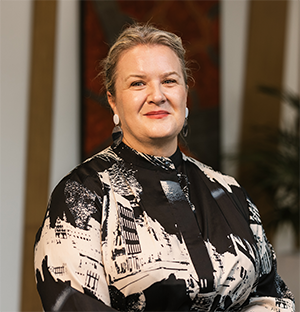
Janine O’Flynn is director of the Crawford School of Public Policy at the Australian National University. She is a public management expert focusing on public sector reform and relationships. She has spent her career developing deep connections with practitioners and the practice of public management. One of the foremost thinkers and researchers in our discipline, she has received best article awards from Public Administration Review and Review of Public Personnel Administration, and several best paper awards from the Academy of Management. Her most recent books, both released in 2024, are Pathways to Positive Public Administration: The International Experience and The Research Handbook on Public Management and COVID-19. Her various activities across research, education, service and engagement seek to better understand how government works and contribute to improving the outcomes of those activities. We could not have a better year for her to provide her insights regarding what good public sector reform looks like and how ASPA can contribute to that goal.
The Donald C. Stone Lecture will take place Sunday morning, March 30 at 10:45 a.m. in the Grand Ballroom, Mayflower Hotel
 Gloria Hobson Nordin Social Equity Lecture: Robert Bullard
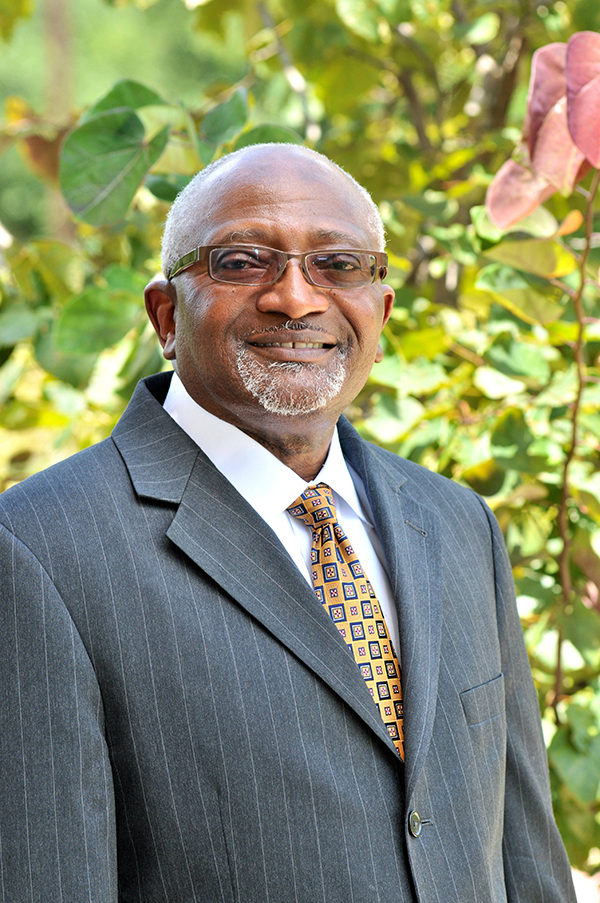
Robert Bullard, the “Father of Environmental Justice” and TIME’s 2024 Earth Award Honoree, has been recognized by numerous organizations for his work on climate justice, awareness and activism. In 2008, Newsweek named him one of “13 Environmental Leaders of the Century.” In 2019, Apolitical named him one of the world’s 100 Most Influential People in Climate Policy and Climate One presented him with the Stephen H. Schneider Award for Outstanding Climate Science Communication. In 2020, WebMD gave him its Health Heroes Trailblazer Award and the United Nations Environment Program honored him with its Champions of the Earth Lifetime Achievement Award. In 2024 he received the Museum of Science (Boston) Bradford Washburn Award, the Urban Land Institute Prize for Visionaries in Urban Development, was awarded an honorary doctorate degree from Clark University and elected to the National Academy of Medicine. Bullard launched the Center for Environmental and Climate Justice at Texas Southern University to address longstanding issues of systemic inequality and structural racism that cause disproportionate pain, suffering and death in Black and other people of color communities. Join us for this luncheon lecture to learn more about this topic from the Father of Environmental Justice himself. (Separate fees apply.)
The Gloria Hobson Nordin Social Equity Luncheon will take place Sunday afternoon, March 30 at 12:15 p.m. in the State Ballroom, Mayflower Hotel
 Nesta M. Gallas Lecture: Marilyn Rubin
Marilyn Rubin is distinguished research fellow at the School of Public Affairs and Administration at Rutgers University, where she also is an affiliated faculty member of the University’s Law School Center for Law, Inequality and Metropolitan Equity. She spent most of her career at the John Jay College of Criminal Justice of the City University of New York (CUNY), serving for several years as director of the College’s MPA Program. She also is a partner in Urbanomics, a consultancy group that began in 1984 to provide governments and businesses with research and support regarding economics, public finance and urban planning. She has worked consecutively and interchangeably in the academic and practitioner worlds for close to 50 years—always with the goal to inform and advance the results of public policies through research, consulting and collaborative engagements with public officials, government agencies and professional organizations. Advancing social equity and justice has been a central element in all of her work. We look forward to the insights she will share about current challenges, as they relate to her career-long experiences. Be in the audience to learn from her vast experience.
The Nesta M. Gallas Lecture will take place Sunday afternoon, March 30 at 2:00 p.m. in the Grand Ballroom, Mayflower Hotel
Watch your inbox tomorrow for another major speaker announcement, keep checking our website for updates and remember to register! Current rates for the full event are $669 for members, $769 for nonmembers. Student and new professional members may register for only $279. View all registration rates and details online here.
We look forward to seeing everyone in Washington, DC, in just two weeks!


E-Learning at Your Fingertips
 ASPA staff work tirelessly to keep your skills up to date and the information flowing all year long through our e-learning program. Visit our website to see more details about upcoming KeepingCurrent, BookTalk and Student and New Professional series programming.
ASPA staff are taking a brief break from webinars to focus on the Annual Conference. We will be back with new programming in April. (If you'd like to be considered for our spring line-up, contact us!) In the meantime, more than 250 hours of programming are in our webinar archives. Catch up on what you missed!
From the Archives
BookTalk: Technology and American Democracy
This resource explores the underpinning democratic theories, including constitutional justifications and competing political rationales, that matter to decisionmakers as they apply information technology in governance to promote democratic principles such as transparency and accountability. The book examines the importance of tenets of deliberative democracy that are present to help guide responsive, adaptive U.S. government decisionmaking and correspondingly expands on the possible dangers that may arise with overreliance on a technocratic approach being used to guide the policy path of government. (Members only)

Students and New Professionals: Effective Study Skills and Time Management
Our presenter focused on methods for improving study habits, employing time-management skills, creating a productive study environment and translating these skills into the workplace as you transition into the next phase of your career. (Members only)

In Memoriam: Jack Underhill
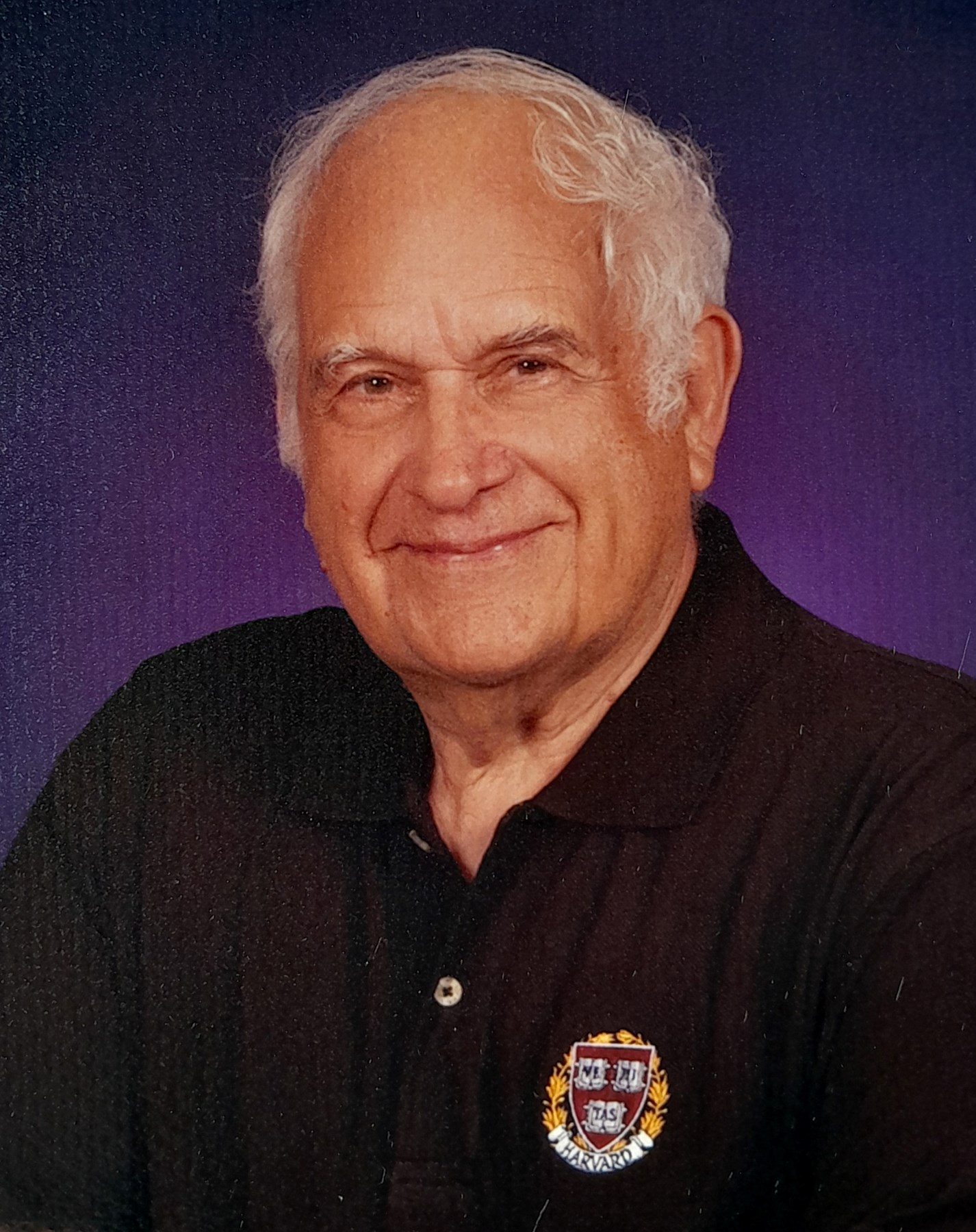 Long-time and devoted ASPA member Jack Underhill passed away recently at the age of 92 after a life "full of love and service."
Underhill joined ASPA in 1989 and has presented a paper focused on poverty-related topics at almost every Annual Conference since his retirement from the federal government in 1997. (He was registered to attend this year's event at the end of this month.) He was committed to ASPA, maintaining membership in the Section on Democracy and Social Justice and the Section on Public Performance and Management annually throughout his membership.
Underhill was born in California in 1932. He spent his early years on a sheep ranch in northern California before his family moved to the San Joaquin Valley. He graduated from Hanford Joint Union High School in 1950. After completing his BS at the University of California at Berkeley in 1954, he enlisted in the U.S. Army, attending the Army Language School at Monterey to study Russian. He was deployed to West Germany, where he served in military intelligence.
Upon his discharge, Underhill used the G.I. Bill to get his MA from Columbia University, after which he pursued a career in the federal government, eventually securing a job at the Office of Emergency Planning. Not long after, he met his wife, Jane; they were married in 1961.
Underhill had a distinguished career, spending 33 of his 42 years in federal service at the Department of Housing and Urban Development, where he served as a research analyst working on community planning. As part of this work, he both hosted and was hosted by Soviet delegations throughout the 1980s, traveling multiple times to the Soviet Union, where he toured widely. In the course of his career, he completed another master’s from Harvard University (1969) and defended his PhD in public policy at George Mason University (1994). He retired from federal service in 1997.
Underhill was as busy following his retirement as before it. He was a man of action, applying himself to community service, intellectual endeavors and artistic pursuits with equal enthusiasm. He was both chairman and a long-time member of the board of trustees at Annandale United Methodist Church and led a seminar at the church for more than 10 years, delivering papers on issues of faith and justice. He was on the board of directors for the Osher Lifelong Learning Institute at George Mason, where he also was a student until his death. He was a community leader for Holmes Run Acres in Falls Church, where he lived for more than 60 years.
Underhill was insatiably curious about the world and a voracious reader. He was fascinated by history, biography, religion, public policy and science. He wrote hundreds of poems and loved photography, painting and woodworking. He traveled extensively with his wife during his retirement.
Underhill is survived by his loving and devoted wife of 63 years, Jane (Russell) Underhill; children Jeannie (Jude) Samson of Austin, TX and Marie (David) Pace of Murrysville, PA; daughter-in-law Adollaya Underhill; grandchildren Shanti, David, Asha, Aliya, Benjamin, Lawson, Nigel, Sara and Roséya; and great-grandchildren June and Grant.
Find his obituary online here.
In Memoriam: Richard Huff
 ASPA member Richard Huff, associate professor and former chair of the MPA program at Virginia Commonwealth University (VCU), passed away in February 2025.
An ASPA member for more than a decade, Huff contributed to ASPA conferences, webinars and the Central Virginia Chapter.
Huff spent more than 20 years at the L. Douglas Wilder School (VCU). His career was distinguished by his contributions to public administration and military service. After serving 26 years in the U.S. Air Force and Army, he continued his commitment to public service through education, profoundly impacting future leaders in VCU's MPA and PhD programs.
Huff was devoted to mentoring students, consistently guiding them with dedication and deep personal involvement, helping to shape the academic and professional journeys for countless graduates. His dedication was rooted in his belief that "professional public administrators work to provide and protect our quality of life every day." His academic achievements included notable publications in esteemed journals and significant contributions to policy evaluations.
Find more information via the VCU website.
New ASPA Members in 2025
 Hundreds of public administrators, scholars, students and researchers have joined ASPA so far this year, including new group members.
This week, we are excited to welcome new students from the University of South Florida and the Texas CPM Program, our most recent additions. We look forward to encouraging students and faculty to make the most of ASPA membership.
As a reminder for all new members, for those looking for easy ways to use your ASPA membership right away, below are a few options:
- Local Chapter Membership
ASPA Chapters provide an unparalleled opportunity for public administrators—practitioners, students and academics alike—to meet and network within their geographic area. Most Chapters host networking events; many present awards. They meet regularly and keep you up‐to‐date about your local public service community. Chapters come with your membership; you should have been connected with a Chapter when you joined. If you need help meeting your Chapter's president or other leaders, email us and we'll introduce you!
- E-Newsletter Access
Stay connected! This newsletter, The Bridge, is distributed once a month and includes the latest information from across the discipline. This Week At ASPA is delivered weekly and gives you an at-a-glance run-down of everything happening at ASPA in the week ahead. Launched recently, Federal Workforce in Turmoil tracks current events related to the ongoing changes to the federal workforce. You can manage your communications preferences via your profile on our website (Click on My Preferences to see all of our mailing lists). If you need help, email us and we'll guide you through it!
- Free Webinars
Every month, ASPA members get exclusive access to professional development opportunities through a robust program of live professional development webinars and BookTalks. Hear from experts in the field about best practices and trends that are changing the field. Can't make it to the live version? Access our members-only webinar archives after the events take place.
- Code of Ethics
ASPA's Code of Ethics provides members—as well as others in the discipline—basic tenets for ethical behavior in public administration. Members also can make the most of supporting documents that help them translate theory into practice.
Check out more services on our website and get started using everything now. Need help learning how to access everything we do? A new member orientation video is on our website. Listen to that for more information!
We hope you stay active in ASPA throughout the coming year!

ASPA's 85th Anniversary: It's Still Going!
 ASPA's 85th anniversary is down to its final weeks—passing into our 86th year on April 1—but we are celebrating through the final weeks! Add your name to the list of those who have celebrated before the clock runs out!
Our field has faced enormous change and challenge since our founding in 1939. Yet we have remained steadfast in our mission of advancing excellence in public service. Indeed, we have an important story to tell. We are an association on strong financial footing, conducting a robust program of in-person and virtual events that matter. We are home to the top-rated journal in our field. We are redefining membership in a way that attracts a growing number of practitioners. And, we make tangible investments in the development of our student and new professional members.
We do all of this with a small but dedicated staff committed to excellence. As you interact with our staff and volunteer leaders throughout the year, we ask you to think about the resources it takes to provide those connections and invite you to participate in our 85-for-85 campaign.
Please consider making a special donation in some denomination of $85 to honor our history and accomplishments... and position ASPA well for the next 85 years.
Make your donation on our website any time (log in information is required; contact us for your details) and know that not only are you supporting ASPA now, but also that you will be on the front lines ensuring that ASPA will be sending messages like this one to future generations of professionals dedicated to the public good.
Use our website now or contact us for help setting up your donation. Monthly payment plans are available!
Thank you for celebrating our 85th anniversary and supporting the future of public service.

AU-SPA Summer Academy Seeks Applications for Class of 2025
 American University will be hosting its fourth Summer Academy—May 19-23, 2025: a week-long intensive workshop open to senior PhD students (and junior faculty) in public affairs.
The Academy consists of sessions covering strategies for publication, career development, developing professional networks, as well as the presentation and discussion of Academy Fellows’ own research papers (ideally job market papers). Each Fellow will receive feedback on their papers from two faculty at American University as well as other participants.
After the conclusion of the Academy, Fellows will be introduced to two senior career mentors in their area of expertise and be invited to attend a series of online sessions on preparation for the job market.
The Academy will be held on campus at American University in the School of Public Affairs; all transportation and logistics for the attendees will be covered.
Click here for more information. All applications are due April 1, 2025 and can be sent directly to David Schwegman.
Best Places to Work List Released
 The annual Partnership for Public Service "Best Places to Work in the Federal Government" list, reflecting 2024 statistics, has been released, reporting an engagement and satisfaction score of 67.7 out of 100 for federal workers—one of the highest since these reports began in 2003.
NASA maintained its number-one spot for the 13th year in a row, scoring 81.6 out of 100. The Environmental Protection Agency came in second place with an overall score of 79.9; the Department of Health and Human Services was ranked third with a score of 76.3. For mid-sized agencies, the Government Accountability Office topped the list, posting an overall score of 87.7 out of 100. The General Services Administration and Federal Energy Regulatory Commission tied for second place with a score of 85. As Federal News Network pointed out, "Many agencies that earned the top spots...last year are now experiencing major and tumultuous shifts in their workforces."
Find the full rankings on the Partnership's website.

Public Administration Today Highlight
 Public Administration Today features white papers, research and blogs from across the profession. If you're interested in more—especially your own curated news feed in your inbox every week—visit the website, create an account and check off your interest areas so you can stay up to date about the latest research being released!
What Is the Impoundment Control Act and What Is GAO's Role?
 via GAO's WatchBlog: The Impoundment Control Act of 1974 is the main legal mechanism for the president to seek to delay or permanently cancel federal funding once it has been enacted by Congress. This WatchBlog post looks at what an impoundment is and GAOs role under it.
Tips, Resources and the Fun Stuff
Last Couple of Weeks Made You Crazy? At Least You’ve Got a Lot of Company
Events of the last few weeks have caused federal managers’ heads to spin: the resignation offer, the closure of agencies and the new policy schedule. All these developments have sparked lawsuits. One of the litigants is the National Active and Retired Federal Employees Association. John Hatton, staff vice president at NARFE, joined the Federal Drive with Tom Temin to discuss the what’s and wherefores.
Trump Targets an Ideal Born of a President’s Murder
The act of violence almost 150 years ago effectively gave birth to the civil service, that class of nonpartisan experts who cannot be hired or fired for political reasons.
What happens to my insurance when I leave the federal government?
Most of your benefits can be continued in retirement—if certain conditions are met.
As Trump Goes After Universities, Students Are Now on the Chopping Block
Uncertainty about how much money colleges and universities stand to lose has led some schools to reduce the number of doctoral students, in some cases reneging on offers.
Trump to Sign Executive Order to Take Aim at Public Service Loan Forgiveness
White House Staff Secretary Will Scharf said the order aims to ensure people working for nonprofit organizations engaged in "improper activities," such as illegal immigration, can’t have their loans forgiven.
Study-Abroad Funding Is Paused, Leaving Some Students Stranded
The Trump administration stopped State Department funding for scholarships like the Fulbright. Weeks later, it is still unclear when it may resume.

In the News
 Today's headlines contain plenty of news coverage of some of our nation's most pressing public administration challenges. ASPA has curated some of the most important stories from recent weeks. If you have not seen these yet, make sure you read them now!
Infrastructure
Public Finance
Public Service
Note that most news related to federal workforce changes by the current administration are being reported in Federal Workforce in Turmoil. Bridge subscribers have been automatically subscribed to that publication; contact us if you need to check about your ASPA email subscriptions.
Social Equity
Members in the News
Pamela Herd:
Who Is Included in Trump's America?
Chris Koliba:
Kansas Public Administration Professor Calls for Action in Wake of Eroding Democratic Norms
Don Moynihan:
Trump's Assault on Social Security
Ron Sanders:
Trump Administration’s OPM Eyeing Career Human Capital Leaders in New Guidance
Kayla Schwoerer:
How 18F Transformed Government Technology—and Why Its Elimination Matters
Alan Shark:
Innovation Meets Ideology: The Political Challenges Facing Today’s CIOs
Kendra Stewart:
A Growing Rural Charleston Town Has Tapped Out Its Sewer Capacity. How Will It Impact Housing Costs?
|
|
|
|
Around Public Administration
Here are the most recent updates from across the profession. Did we miss you? Send us your news and we'll include it in the next round!
Upcoming Events:
Calls for proposals, calls for nominations and other updates:
-
ROPPA Special Issue—Human Resource Management, the 2030 Agenda, and the Sustainable Development Goals: Whither the Public Sector?
This special issue will examine how public sector human resource management (HRM) is addressing key global challenges such as inequality, climate change, economic growth and social well-being, and how HRM functions like recruitment, training, performance management, building competencies, leadership development etc., contribute to the achievement of these goals. By analyzing both the successes and challenges faced by public sector HRM in advancing the SDGs, this special issue will offer valuable perspectives and actionable recommendations for enhancing the role of HRM in sustainable public sector development. All abstracts are due by April 1; all full papers will be due by October 1. Please email your abstract to Chris Rees.
-
19th Annual E-PARCC Competition Open
The Program for the Advancement of Research on Conflict and Collaboration (PARCC) at the Syracuse University Maxwell School of Citizenship and Public Affairs invites submissions for its 19th annual E-PARCC competition. E-PARCC provides free online resources for those who teach conflict and collaboration. More than 3,000 visitors from more than 40 different countries take advantage of E-PARCC materials monthly. Public and nonprofit managers, civic leaders and elected officials rarely are the sole supervisors of unitary organizations. Collaborative problem-solving, public management, governance, and network governance and analysis have become essential topics in most public administration and policy programs. But collaboration is not simply a body of substantive knowledge. It also is a set of skills, attitudes and behaviors. PARCC believes one of the best ways to prepare students to operate in a collaborative world is through the use of case studies, simulations and other learning exercises. The E-PARCC competition aims to expand access to high-quality, relevant case studies and simulations focused on helping students and practitioners better understand and enact multiple aspects of collaboration to address public issues and problems. Among other options, entries might focus on the use of collaborative methods to identify public policy and management problems and/or create and implement policy and management solutions; develop innovations that improve the design, delivery and evaluation of public services and programs; apply participatory and consensus-building methods to address and overcome societal divisions; and improve open, transparent and accountable government and governance through advocacy and public action. Click here for more information. All entries are due to [email protected] by April 1, 2025.
-
Ian Axford Fellowships in Public Policy Application Period Open
Ian Axford Fellowships (New Zealand) announces its application window for 2026 Fellows is open. Fellowships are for outstanding mid-career U.S. professionals, interested in gaining research and first-hand knowledge of public policy in New Zealand. The mission of the Ian Axford Fellowships in Public Policy programme is to increase mutual understanding between the United States and New Zealand; Axford fellows are expected to understand and support this mission. The Fellowship is interested in candidates who can contribute to contemporary policy priorities in New Zealand. Fellowships can be between three to five months in duration; applicants should discuss a timeline preference with their potential host agency, but the Axford board will decide what length of fellowship they will offer selected fellows. Fellows are required to attend an orientation programme held each February in Wellington. Find more information on the Ian Axford Fellowship website. All applications are due by April 22 (New Zealand time).
-
University of Chicago, Harris School of Public Policy Application Period Open
The University of Chicago, Harris School's credentialing programs are open for applications. Programs include: Policy Analytics Credential—a nine-week online program that provides a foundational introduction to R programming and statistics (March 31–May 30); Data and Policy Summer Scholar—a seven-week online program that provides training in data analytics and R programming (June 30–August 15); Policy Research and Innovation Bootcamp—a two-week, in-person program in Chicago focusing on policy research methods, a Policy Hackathon, and career development (July 28–August 8); and Persuasive Writing Credential—a six-week online program that equips you with skills to craft evidence-based policy stories that drive meaningful action (July 14–August 22). Find more information via the links above.
-
Call for Proposals: ABFM Research Conference
The Association for Budgeting and Financial Management invites proposals for panels, papers and posters for its 37th annual research conference, October 23–25 at the Loudermilk Conference Center on the Atlanta campus of Georgia State University. Proposals are invited from scholars, students and practitioners of public budgeting and financial management on the full range of topics encompassed by the Section's name. Proposals should address relevant issues at any level of government or other public-serving organization, across the full range of practical and theoretical applications. Examples of topics from panels and presentations in previous years are provided below. This year’s conference has a special interest in collaborative budgeting for effective and ethical government outcomes. All submissions are due by May 1, 2025. Click here for more information.
-
Call for Proposals: UKAPA 2025 Annual Conference
Building on last year’s inaugural conference, which considered the future of public services, this year’s theme is "The Future of Public Administration." With governments around the world wrestling with stagnant economic growth and rising public expectations, while approaching the limits of public toleration for higher taxation, the resulting fiscal stress poses serious challenges in terms of the size, scope and funding of the state, and of publicly provided goods, services and welfare. Environmental pressures, sustainability concerns, demographic change and rapidly evolving technological capabilities, combine to exacerbate these intense pressures on governments, policy makers and public administrators. Therefore, those actors are being tasked with developing innovative ways of providing public services within ever tighter public budgets. Public provision in many states is at a crossroads, with previous longstanding commitments to universalism susceptible to calls for more affordable but selective governmental interventions. The changing global landscape demands a renewed conversation between academics, policy makers and practitioners to examine how best to meet the challenges of our age. Governments everywhere are obliged to examine the breadth of their operations, considering radical measures in terms of the form, function, finance and staffing of the public sector, if the most vulnerable in society are to be protected, in ways that do not undermine incentives and economic vitality, nor alienate public sector workforces. In addition, and closer to home, the ongoing retrenchment with job cuts and course consolidation in the UK higher education sector may well pose questions over "The Future of Public Administration" in universities. Hence, we will be seeking to have a frank dialogue about the impact of these developments. This two-day conference provides a space for academics, researchers, doctoral students and practitioners to discuss the future of public administration. The multi-disciplinary nature of the event will provide opportunities for colleagues from the various dimensions of public administration (and allied subjects) to connect and engage in open dialogue and vigorous debate. Find full conference information online; all abstracts are due by May 5. Abstracts may be submitted via email here.
-
Special Issue: Public Budgeting and Finance—Adversarial Collaborations in Public Budgeting and Finance
Adversarial collaboration, an approach proposed by Nobel Prize Laureate Daniel Kahneman, is a method for resolving scientific disputes that arise from conflicting theoretical or ideological views. Authors or teams with opposing views work together on a research project to enhance or clarify understanding of a disputed knowledge area in a mutually satisfying manner. The project is designed to eliminate clear biases or weaknesses that could skew the conclusions. The participation of adversaries throughout the study ensures shared accountability and careful communication of the research. Furthermore, there's typically a pre-commitment to publish the results, irrespective of the findings. Despite their potential, adversarial collaborations aren't as prevalent as other open science innovations aimed at enhancing credibility through transparency, like data sharing, open materials and study preregistration. Public Budgeting & Finance intends to address this shortfall with a special issue (set for late 2026 or early 2027) focused on publishing and recognizing adversarial collaborations. This initiative is open to all topics relevant to public finances. Proposed projects will be evaluated and accepted on a rolling basis through May 2025. Accepted proposals are expected to complete manuscripts by April 1, 2026. Selected teams will be invited to present results at a special conference or dedicated session on the theme of Adversarial Collaborations in Public Finance, and travel funding will be extended to invitees. For more information, contact co-editors-in-Chief Craig Johnson and Justin Ross.
Click here for more information.
-
PMM Special Issue Call for Papers
Public Money and Management announces a special issue: The Politics and Management of Policing. The policing of society is a core feature of the modern state, lying at the heart of relationships between citizens and the state, with questions of legitimacy, equity, power, authority, governance as well as the effectiveness and efficiency of organizational performance as central matters of interest. Policing has some distinctive features, yet also offers insights to other public services. While police organizations are of particular scholarly and professional interest, the analysis of policing may include other groups, organizations and institutions concerned with order and safety in society, hence the focus is on policing not only police. With many countries contemplating or implementing reforms to police organizations, this topic is of wide interest to both academics and practitioners. The audience for readers of this themed issue is an interdisciplinary and broadly defined community of academics and professionals who share an interest in the research of policing, law enforcement and the provision of public safety from an organizational, managerial, governance and/or public policy analysis perspective. Editors invite articles exploring questions of policing and public management, for example concerning the legitimacy, equity, power, authority, governance and organizational performance in policing; the analysis of organizational functions such as strategic planning, human resource management, budgeting and evaluation, coordination of operations, control of accountability of policing, cooperation with public and private partners; whether and how policing is value-creating or value-destroying in different settings and social environments; changing roles and expectations of police at points of political and societal change and/or stress and austerity; comparative analysis of policing values, operations, consequences in or across different locales; political governance systems and their implications for the provision of an effective, fair and accountable police service—in both its ideal forms and its practical manifestations—for policing. All submissions are due June 16, 2025. Click here for more information.
PA TIMES Online
 Here's a selection of current pieces on PA TIMES Online, covering a range of issues within the profession. We accept individual articles on a rolling basis; if you have a piece you think would fit our publication, submit it to [email protected] for consideration. (Please review our submission guidelines in advance!)
|
| |
|